Table of Contents
You’ve created great content—a detailed podcast, an insightful webinar, or an in-depth video. But creating it is only the first step. For your content to actually grow your business, it needs to reach the right people. Without a system, even the best content goes unseen.
Successful content marketing isn't about one viral hit. It's about building a repeatable process that consistently gets your message in front of your target audience, builds authority, and drives results like leads and sales. You need effective content distribution strategies that maximize the impact of every piece of content you create.
This guide will show you 10 proven strategies to build that system. We'll skip the fluff and give you actionable tactics to stop creating content that gets lost and start building a distribution engine that fuels your growth.
You will learn how to:
- Repurpose a single long-form video into dozens of clips for social media.
- Amplify your reach across owned, paid, and earned channels.
- Build engaged communities on platforms like LinkedIn and YouTube.
- Measure your efforts to prove ROI and refine your approach.
A Quick Checklist for Your Content Distribution Workflow
Before diving into the detailed strategies, here’s a simple, repeatable checklist you can use every time you publish a new piece of pillar content (like a webinar or podcast).
- Identify Pillar Content: Choose one long-form video or audio file.
- Atomize It: Use a tool like Flowjin to automatically extract short, shareable clips.
- Optimize for SEO: Create a blog post or transcript from the content targeting a specific keyword.
- Schedule on Social Media: Distribute clips on LinkedIn, YouTube Shorts, TikTok, and Reels.
- Send to Email List: Announce the new content in your newsletter with key takeaways.
- Engage in Communities: Share relevant clips or insights in your private groups.
- Consider Paid Amplification: Boost top-performing posts to reach a wider audience.
- Track Performance: Monitor which channels and formats drive the most engagement and leads.
1. Multi-Platform Repurposing & Atomization
Content atomization is a powerful strategy for maximizing the value of a single long-form asset. You break down one "pillar" piece of content—like a webinar or podcast—into many smaller, standalone "atomic" pieces to distribute across various channels.
Instead of creating content from scratch for every platform, you repurpose one high-effort recording. A one-hour webinar can become a blog post, several short video clips for TikTok and Reels, a carousel for LinkedIn, and a key insights graphic for X (formerly Twitter).
This ensures your core message reaches different audiences in the formats they prefer. To integrate this into a cohesive plan, consider an omnichannel marketing strategy.
How to Implement This Strategy:
- Start with Pillar Content: Choose a valuable, long-form video or audio file like an interview or product demo.
- Atomize and Adapt with Flowjin: The fastest way to do this is with an automated tool. Flowjin is an AI-powered platform for creators and marketers that turns one long-form video into weeks of social-ready content automatically. Upload your long-form file, and Flowjin’s AI will identify the best moments, resize them for different platforms, add animated captions, and even generate titles and descriptions.
- Schedule Strategically: Distribute the atomized content over several days or weeks. This creates a sustained campaign from a single recording and keeps your audience engaged without overwhelming them. You can learn how to transform one video into a full week of content.
2. Owned Media & Email Newsletter Distribution
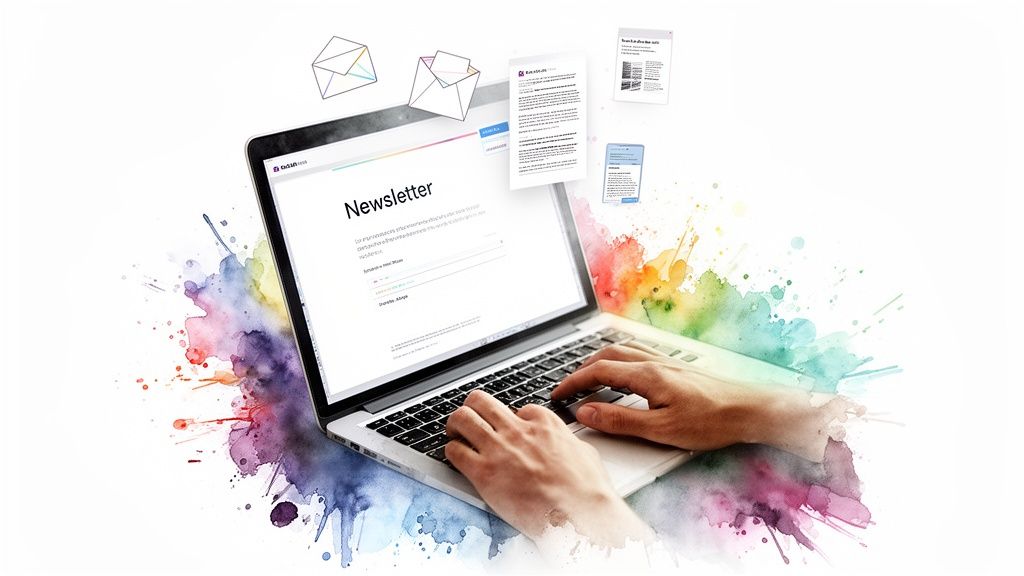
Owned media distribution uses channels you control, like your blog and email newsletter. This strategy gives you a direct line to your audience, free from unpredictable social media algorithms.
Delivering content straight to your subscribers' inboxes builds a loyal community and ensures your message is seen. It's one of the most effective content distribution strategies for nurturing long-term relationships and converting high-value assets, like webinars, into leads.
How to Implement This Strategy:
- Create a Powerful Opt-In: Offer a compelling reason to subscribe, like a free resource, exclusive content, or a mini-course.
- Repurpose Content for Email: Transform your long-form video or audio into email-friendly formats. A podcast can become a summary with key takeaways, while a webinar can be broken into a multi-part email series.
- Segment Your Audience: Don't send the same message to everyone. Group your subscribers based on interests or engagement to send more targeted, relevant content. You can discover how to segment your newsletter.
- Drive Action with CTAs: Every email should have a clear purpose. Include a call-to-action (CTA) that guides subscribers to your pillar content, a product page, or your website.
3. Influencer & Creator Partnerships
Influencer and creator partnerships leverage the trust and reach of established voices in your niche. Instead of building an audience from scratch, you tap into a pre-existing, engaged community.
When a respected creator shares your content, their audience sees it as a valuable recommendation, not an ad. This is a direct way to get targeted exposure. For instance, Notion partners with productivity creators for tutorials, instantly accessing their massive fan bases.
To manage these relationships, many brands use influencer marketing platforms like AspireIQ.
How to Implement This Strategy:
- Identify Niche Creators: Focus on micro-influencers (10k-100k followers) with highly engaged, relevant communities.
- Define Partnership Terms: Create a clear agreement outlining deliverables, content rights, and compensation.
- Provide Shareable Assets: Make it easy for partners to share your content. Provide pre-made video clips, quote graphics, and UTM-tagged links.
- Track and Measure Performance: Use unique links or promo codes to monitor traffic and leads generated from each partnership to calculate ROI.
4. SEO & Organic Search Optimization
SEO is one of the most sustainable content distribution strategies. It focuses on optimizing content to rank in search engines like Google and YouTube, capturing "free" traffic from users actively searching for solutions.
Instead of a temporary spike from social media, SEO-driven content attracts relevant visitors for months or even years. It turns your content library into an evergreen asset that generates leads on autopilot.
To succeed, you must align content with the specific problems your audience is trying to solve. Learn more about how to create SEO-friendly content.
How to Implement This Strategy:
- Conduct Keyword & Intent Research: Use tools like Ahrefs to find keywords your audience uses. Analyze top-ranking results to understand if users want a how-to guide, a tool list, or a direct answer.
- Optimize On-Page Elements: Integrate keywords into your content's URL, title, headings, and the first 100 words. For videos, optimize the title, description, and tags.
- Transcribe & Repurpose for SEO: Convert video and audio content into text. A full transcript can be published as a blog post optimized for relevant keywords, creating a search-friendly asset from a recording.
- Build Topical Authority: Create a comprehensive "pillar" page on a broad topic and support it with "cluster" posts on related subtopics, linking them all together.
- Refresh & Update: Regularly update older content with new data and examples to maintain its relevance and rankings.
5. LinkedIn Content Distribution & Thought Leadership
LinkedIn is a powerful engine for building authority, especially in B2B. This strategy focuses on consistently sharing valuable insights to position you or your company as a go-to expert.
Instead of sales pitches, prioritize education and engagement. By distributing content natively through posts, carousels, and video, you can drive brand awareness and generate qualified leads.
How to Implement This Strategy:
- Establish a Consistent Cadence: Aim for 3-5 high-quality posts per week to stay top-of-mind with your audience and the algorithm.
- Repurpose Content Natively: Share highlights from webinars and podcasts as native LinkedIn video clips, text-based posts with key takeaways, or carousels. Don't just drop a link; summarize the value in the post.
- Create High-Engagement Formats: Use document carousels (PDFs) to share actionable frameworks or step-by-step guides. This format encourages clicks and boosts visibility.
- Engage Authentically: Don't just post and ghost. Comment on content from others in your industry, tag relevant people, and respond to every comment you receive to foster community.
6. Community & Audience Engagement (Discord, Slack, Facebook Groups)
Community engagement shifts focus from public platforms to dedicated spaces like Discord, Slack, or a Facebook Group. This allows you to bypass unpredictable algorithms and deliver content directly to your most engaged followers.
In these spaces, content distribution feels less like marketing and more like sharing valuable resources with peers, leading to higher engagement and loyalty. To keep your community active, you need a consistent flow of content. You can learn how to create more content in less time by repurposing your core assets.
How to Implement This Strategy:
- Choose Your Platform & Value Proposition: Select a platform where your audience already spends time and clearly define why someone should join (e.g., exclusive content, peer networking).
- Seed the Community with Value: Launch with exclusive content, like early-access podcast episodes or behind-the-scenes clips, to attract your first members.
- Establish Guidelines and Moderation: Set clear rules from day one to maintain a positive culture.
- Drive Engagement with Interactive Content: Run AMAs, host member-only workshops, and start discussions around your content to encourage interaction.
7. YouTube Strategy & Long-Form Video Distribution
YouTube is a top channel for long-form video, acting as both a content hub and the world's second-largest search engine. This strategy involves creating in-depth videos (over 10 minutes) to build a subscriber base and leverage the platform's recommendation algorithm.
Unlike short-form platforms, YouTube rewards content that holds viewer attention. By uploading full webinars or podcast episodes, you can capture audiences who prefer a visual or platform-specific experience.
How to Implement This Strategy:
- Optimize for Search and Discovery: Write keyword-rich titles and create compelling thumbnails that state the video's value. A well-written description with timestamps helps YouTube's algorithm rank your content.
- Structure for Retention: Use chapters (timestamps) to break up long videos into digestible sections, improving the viewer experience.
- Encourage Engagement and Watch Time: Create playlists to group related content. Use on-screen graphics and verbal cues to prompt viewers to like, comment, and subscribe.
- Maximize Accessibility: Enable and edit closed captions. Transcriptions make your content accessible and provide more data for YouTube's search algorithm. You can learn more about creating great video content.
8. Paid Advertising & Retargeting (Meta, Google, LinkedIn Ads)
Paid advertising is one of the most direct and scalable content distribution strategies. It allows you to promote your content on platforms like Meta, Google, and LinkedIn to highly specific audience segments, guaranteeing placement in front of your ideal customer.
Use it to reach cold audiences, nurture warm leads, and re-engage past website visitors. For example, a SaaS company can use LinkedIn ads to serve a case study to users with a specific job title.
To guide your targeting, explore how to create a customer avatar.
How to Implement This Strategy:
- Identify Top-Performing Content: Find your organic posts with the highest engagement or conversion rates. These are proven assets to put a budget behind.
- Define Your Audience & Platform: Use LinkedIn for B2B, Meta for B2C, and Google for intent-based search ads. Build custom audiences based on website visitors or email lists.
- Create Ad Variations: Repurpose your content into ad-native formats. A podcast clip can become a short video ad for Meta Stories. Test different visuals and copy.
- Launch and Optimize: Start with a clear objective (e.g., lead generation, traffic). Monitor metrics like cost-per-lead (CPL) and return on ad spend (ROAS), and reallocate budget to the top performers.
9. Podcast Network & Audio Distribution (Spotify, Apple, Anchor)
Leveraging podcast networks taps into the highly engaged audiences of audio platforms like Spotify and Apple Podcasts. The intimate nature of audio creates a strong connection with listeners, making it a powerful channel for building brand authority.
This strategy isn't just about publishing full episodes; it's about atomizing that audio into shareable clips and audiograms for wider social promotion. To expand your reach, explore opportunities in podcast network and audio distribution channels like Spotify and Apple.
How to Implement This Strategy:
- Establish Your Distribution Hub: Use a podcast hosting service like Anchor to generate an RSS feed and submit it to directories like Apple Podcasts and Spotify.
- Optimize for Discoverability: Create compelling show notes and full transcripts for each episode to improve accessibility and make your audio content indexable by search engines.
- Cross-Promote and Collaborate: Promote new episodes across your email newsletter and social media. Appear as a guest on other relevant podcasts to tap into new listener bases.
- Repurpose Audio for Social Media: Extract the most valuable moments from your episodes and convert them into short audiograms or text graphics to share on social media. Find proven methods for promoting your podcast after it goes live.
10. Webinar & Virtual Event Distribution
Using webinars transforms a one-time live session into a long-term lead-generation engine. A webinar acts as a central "content hub" to attract a specific audience and generate a wealth of repurposable assets.
Companies like HubSpot host webinars, capture leads during registration, and then atomize the recording into dozens of smaller content pieces. The webinar becomes a high-value gated asset, while derivative clips are distributed across open channels to drive traffic back to the recording.
How to Implement This Strategy:
- Choose a High-Impact Topic: Select a topic that solves a pressing pain point for your ideal customer.
- Promote Across Channels: Announce the live event across your email list, social media, and website. Collaborate with guest speakers to leverage their audiences.
- Gate and Repurpose: After the event, place the full recording behind a registration form on your website. Use a tool like Flowjin to automatically extract key moments and turn them into shareable video clips for social media.
- Create a Follow-Up Nurture Sequence: Develop an automated email sequence for registrants to share the recording, key takeaways, and related resources to guide leads down the funnel.
How to Choose the Right Content Distribution Strategy
With so many options, how do you decide where to focus? Use this simple table to match the right strategies to your goals, resources, and audience.
Automate Your Distribution and Get Your Time Back
We’ve covered 10 powerful content distribution strategies, from atomizing your core content to leveraging paid ads and community engagement. The central theme is clear: creation is only half the battle. A deliberate, multi-channel distribution plan is what makes your content impactful.
These strategies work together. Your LinkedIn posts can fuel your email newsletter, which drives sign-ups for a webinar. Clips from that webinar can become high-performing assets for YouTube and paid ads. This flywheel effect is the result of a systematic and repeatable process.
From Strategy to System: Your Actionable Roadmap
Mastering content distribution isn't about doing everything at once. It's about building a sustainable system. Here’s how to start:
- Start with 'Pillar' Content: Focus on producing one high-value long-form asset, like a podcast or webinar. This is the source material for all your distribution.
- Embrace 'Atomization': Break down your pillar content into dozens of smaller "atoms"—short video clips, quotes, and audiograms. This lets you feed every channel without burning out.
- Prioritize Owned Channels: Your email list and website are assets you control. Make growing them a top priority.
- Measure What Matters: Track website clicks, lead magnet downloads, and demo requests—not just likes and views. Use this data to double down on what works.
A robust distribution plan builds a powerful brand presence that works for you 24/7. It creates a consistent and omnipresent brand experience, building trust and keeping you top-of-mind. The key is to move from manual tasks to a streamlined workflow. This is where you unlock true scale.
Executing these strategies consistently is key, but juggling tools for clipping, captioning, and scheduling is a bottleneck. Flowjin is an AI-powered platform for creators and marketers that turns one long-form video or audio file into weeks of social-ready content, automatically. Build a smarter, more efficient content engine by visiting Flowjin to see how you can scale your reach.
meta title: 10 Effective Content Distribution Strategies to Grow Your Audience
meta description: Learn 10 proven content distribution strategies to amplify your reach. This guide covers repurposing, SEO, owned media, and paid ads for audience growth.
slug: content-distribution-strategies
internal links: