Table of Contents
You're creating valuable long-form content like webinars and podcasts, but your effort isn't translating into reach. The "create and post" cycle feels endless, and your best work gets buried after one share. The goal is simple: get your message in front of more people, consistently, without burning out.
Success means turning every core video or podcast into a stream of engaging, platform-native clips that build your audience and drive results. It's about building a repeatable content engine, not just running a series of one-off campaigns.
This guide covers 10 essential content creation best practices to help you work smarter. We'll focus on actionable workflows for planning, production, and distribution, showing you how to:
- Repurpose one core asset into dozens of high-quality clips and posts.
- Optimize your content for the unique algorithms of each social platform.
- Maintain a consistent publishing schedule without creating new content daily.
- Use data to make informed decisions and improve performance.
By the end, you'll have a clear framework to scale your content output and turn it into a predictable growth channel.
1. Repurpose One Core Asset into Many Short-Form Clips
One of the most effective content creation best practices is to treat every long-form video or podcast as a goldmine for smaller assets. Instead of a "one-and-done" post, this strategy multiplies your output from a single recording session. Take one pillar asset—like a webinar or interview—and systematically extract its most valuable moments.
This dramatically increases your reach by tailoring content for different platforms. A 45-minute webinar can become ten 60-second educational clips for TikTok and Reels, five quote graphics for LinkedIn, and several audiograms for Instagram Stories.
How to Implement This Strategy:
- Identify Your Pillar Content: Start with your highest-performing long-form videos. Which webinars had the most engagement? Which podcast episodes got the most downloads? This ensures you’re repurposing content that already resonates.
- Extract Key Moments with AI: Manually scrubbing through hours of footage is slow. Instead, use a tool to do the heavy lifting. Flowjin is an AI video repurposing tool for busy creators and marketers that turns long-form content into dozens of social-ready clips. Simply upload your video or provide a link, and its AI will identify the most engaging moments and generate clips automatically.
- Create Branded Templates: Design standardized templates for each asset type (e.g., video clips with branded captions, quote cards). Templates ensure brand consistency and speed up production, letting your team focus on the message, not the design. You can create and save your brand kits in Flowjin to apply them to all clips with one click.
2. Optimize Content for Each Platform’s Algorithm
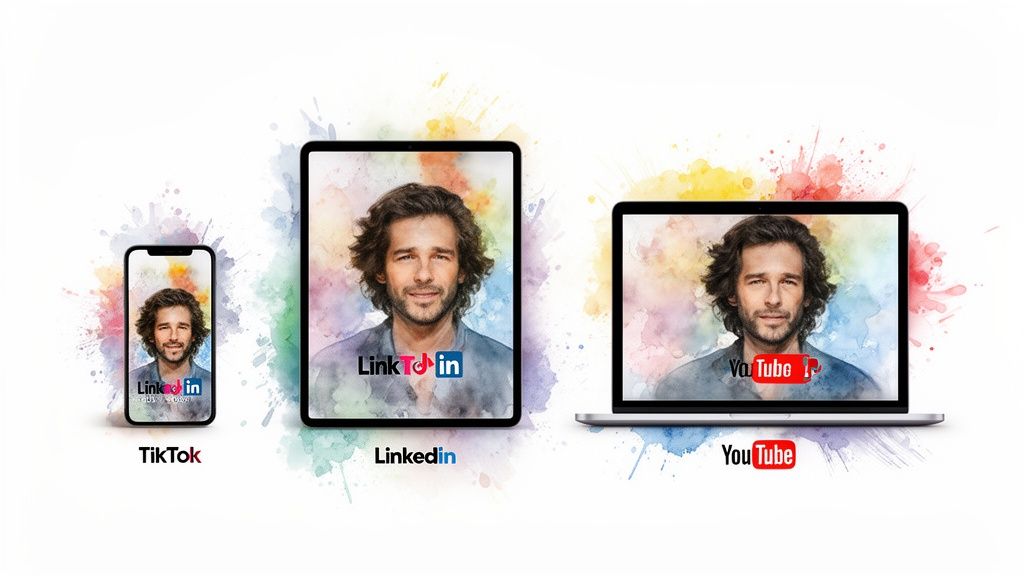
A critical mistake is posting the exact same asset across all social channels. What captivates an audience on TikTok falls flat on LinkedIn. True optimization means tailoring your content to feel native to each platform's culture, format, and algorithm.
This platform-specific strategy ensures your message resonates. A B2B brand might post a fast-paced, trend-driven clip on TikTok for awareness, while sharing a more detailed, educational version of the same topic on LinkedIn to drive professional engagement. This thoughtful adaptation significantly boosts performance.
How to Implement This Strategy:
- Analyze Platform Analytics: Dive into the native analytics for each channel. Identify which formats, lengths, and topics consistently perform best. This data provides a clear roadmap for what to create.
- Adapt Your Hook: The first three seconds are everything. A TikTok video might need a high-energy visual hook, while a LinkedIn video could start with a bold, text-based question. Test different openings for each platform.
- Adjust Technical Specs: Tailor your content to each platform's preferred dimensions and style. Use vertical 9:16 video for Reels and TikTok, a 1:1 square for Instagram or LinkedIn feeds, and 16:9 widescreen for YouTube.
3. Maintain a Consistent Publishing Cadence
One of the most foundational content creation best practices is establishing a predictable publishing rhythm. Posting consistently builds audience trust and trains platform algorithms to favor your content. A well-organized content calendar is the engine that drives this consistency.
This approach prevents content gaps and eliminates the last-minute scramble to find something to post. By planning ahead, you can build a reliable content pipeline that nurtures your audience and methodically moves them toward business goals.
How to Implement This Strategy:
- Plan in Sprints: Batch-create your content in dedicated production sprints. Dedicate a block of time to film, write, or design a month's worth of content at once. This boosts efficiency and frees up mental energy.
- Use Content Pillars: Define 3-5 core themes or "pillars" for your content (e.g., Education, Behind-the-Scenes, Customer Success) and rotate through them. This ensures variety while maintaining brand focus. Learn how to create a content calendar that drives growth.
- Schedule and Automate: Use scheduling tools to plan your posts weeks in advance. This guarantees your cadence remains steady even during busy periods. Platforms like Flowjin integrate with schedulers, allowing you to push dozens of repurposed clips directly into your content queue.
To achieve this level of consistency without burnout, you can learn more about how to schedule social media posts and build a workflow that runs on autopilot.
4. Add Strategic Captions and Text Overlays
Treat captions and text overlays as a primary creative element, not an afterthought. In today's sound-off viewing environments on LinkedIn and Instagram, captions are essential for message delivery. They also enhance accessibility and dramatically improve comprehension for everyone.

This approach transforms passive viewing into an active experience. Instead of just transcribing speech, dynamic captions can emphasize key words and add brand personality. This makes your content more memorable and shareable.
How to Implement This Strategy:
- Prioritize Readability: Use high-contrast colors for text. Position captions carefully to avoid obscuring important visuals. Use your brand's fonts and colors to maintain consistency.
- Go Beyond Transcription: Use captions to highlight the most important takeaways. Animate text or change colors to emphasize key phrases. For interviews, include speaker names to improve clarity.
- Automate Your Workflow: Manually transcribing and timing captions is incredibly time-consuming. Flowjin automatically generates accurate, word-level animated captions for every clip. You can easily review and edit the text, correct any jargon, and customize the style to match your brand before publishing.
5. Leverage Data to Guide Your Content Strategy
One of the most critical content creation best practices is shifting from guesswork to data-driven decisions. Instead of creating content based on assumptions, use analytics to understand exactly what resonates with your audience. Tracking key metrics helps you systematically optimize your strategy.
This method transforms content into a measurable business driver. By analyzing performance data, teams can confidently double down on what works and eliminate ineffective tactics.
How to Implement This Strategy:
- Define and Track KPIs: Before launching a campaign, establish clear Key Performance Indicators (KPIs) aligned with business goals. Track engagement rates, views, and conversions to measure what truly matters.
- Conduct Regular Content Audits: Schedule monthly or quarterly reviews of your content's performance. Identify the top-performing assets and dissect what makes them successful. Look for common threads in their topics, formats, or hooks.
- Establish a Feedback Loop: Create a process for sharing performance insights with your content production team. This ensures that data-driven learnings are directly incorporated into new assets, fostering a cycle of continuous improvement.
6. Create Platform-Specific Copy, Headlines, and CTAs
Posting the same headline and description across LinkedIn, TikTok, and YouTube ignores the unique audience expectations of each channel. Tailored copy grabs attention, communicates value, and drives actions that align with platform norms.
This strategy ensures your message resonates instead of feeling out of place. Professional, ROI-focused copy performs well on LinkedIn, but the same text would fall flat on TikTok, where casual, curiosity-driven hooks are essential.
How to Implement This Strategy:
- Lead with Platform-Specific Value: Start every caption with the most important information for that audience. For a LinkedIn post, this might be a key statistic. For a YouTube Short, it could be a question that creates a curiosity gap.
- Adapt Tone and Language: Adjust your writing style to match the platform's culture. Use a professional tone for LinkedIn, a casual voice for TikTok, and an educational style for YouTube.
- Optimize CTAs and Hashtags: A "Learn More" CTA with a link works for LinkedIn, while "Watch the full episode" is better for YouTube clips. Use 3-5 relevant hashtags on Instagram and LinkedIn, but stick to 1-3 trending hashtags on TikTok.
7. Optimize Video Structure and Pacing for Retention
One of the most critical content creation best practices is designing your video's structure with audience retention in mind. Viewers decide whether to keep watching in the first three seconds. Optimizing your video's pacing is a strategic necessity to hook viewers and maintain their interest.
This approach transforms passive viewing into active engagement by using a mix of editing principles and modern, short-form storytelling techniques. Instead of a linear delivery, this method employs pattern interrupts and varied pacing to keep the audience focused.
How to Implement This Strategy:
- Hook Viewers Immediately: The first 3 seconds are non-negotiable. Start with a bold statement, a compelling question, or a quick preview of the most valuable outcome. Don't waste time on long, branded intros.
- Use Pattern Interrupts: To combat audience fatigue, introduce a new visual or auditory element every 5-10 seconds. This can be a text overlay, a sound effect, a zoom-in, or a cut to relevant B-roll.
- Vary Pacing and Shot Selection: A mix of fast-paced cuts and intentional pauses creates a dynamic viewing experience. Vary your shots between wide, medium, and close-ups to add visual interest.
For a deeper dive into editing techniques that drive results, you can explore detailed guides on how to edit Instagram Reels for engagement.
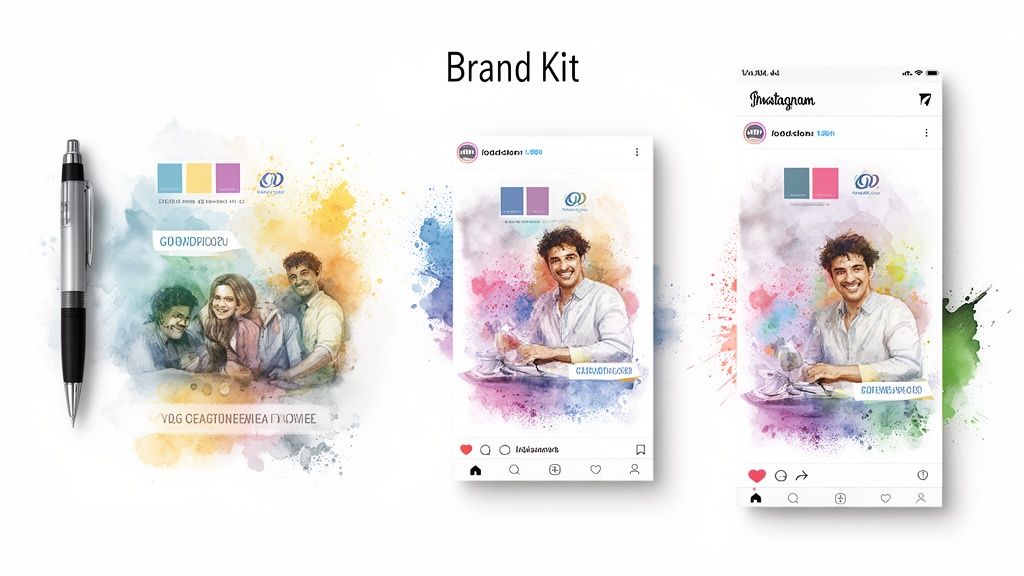
8. Apply Consistent Branding Across All Content
Maintaining a consistent visual identity across every asset you produce is a powerful way to build brand recognition. This involves more than adding your logo; it means creating a cohesive experience through a unified color palette, typography, and design style.
This approach transforms disparate pieces of content into a recognizable family of assets that reinforces your brand's professionalism. When a viewer sees your signature font or color scheme, they immediately know the content is yours.
How to Implement This Strategy:
- Develop a Brand Style Guide: Create a central document that outlines your brand's visual rules: colors (with HEX codes), fonts, logo usage, and overall tone.
- Build Reusable Templates: Design a core set of templates for your most common content formats. Flowjin allows you to create and save branded templates, which automatically apply your logo, colors, and custom fonts to new clips, ensuring every piece is perfectly on-brand with zero extra effort.
- Enforce Consistency: Train all team members on the brand guidelines and template usage. The goal is a cohesive brand presence, not rigid uniformity that ignores platform context.
9. Implement SEO in Titles, Descriptions, and Transcripts
Treating your content's metadata as a primary driver of discovery is one of the most crucial content creation best practices. You must optimize titles, descriptions, and transcripts to ensure search engines like Google and YouTube can find, understand, and rank your content. This turns your content into a long-term asset that generates organic traffic.
A well-written, keyword-optimized description helps search algorithms understand the content's relevance, while a complete transcript allows them to index every word spoken. This makes your content discoverable for a vast range of long-tail search queries.
How to Implement This Strategy:
- Conduct Keyword Research: Before publishing, identify primary and secondary keywords relevant to your topic. Your primary keyword should appear in your title.
- Write Rich Descriptions: Craft detailed descriptions of 200-300 words that naturally incorporate your target keywords. Explain what the content covers and what viewers will learn.
- Leverage Full Transcripts: Always include a full, accurate transcript of your video or audio. Transcripts provide a text-based version of your content for search engines to crawl, dramatically improving its ability to rank for specific spoken phrases.
10. Engage Authentically With Your Audience
One of the most powerful content creation best practices is shifting from a broadcast-only mindset to active community building. This means treating your audience not as passive consumers but as active participants. Authentic engagement transforms viewers into a loyal community.
This approach closes the loop between creation and consumption. When audiences see that their input is valued, their connection deepens significantly. This loyalty translates into word-of-mouth referrals and a resilient brand.
How to Implement This Strategy:
- Prioritize Early Engagement: Respond to the first 20-30 comments within the first hour of posting. This initial burst of activity signals to platform algorithms that your content is engaging, which can boost its visibility.
- Create Dedicated Community Channels: Move deeper conversations into dedicated spaces like Discord, Slack, or Circle. These channels allow for more meaningful interactions and a stronger sense of belonging.
- Establish Feedback Loops: Actively solicit and act on audience feedback. When you use a viewer's comment as inspiration for new content, publicly acknowledge their contribution. This encourages further engagement.
Content Creation Best Practices: A Quick Comparison
Turn Your Best Practices into a Repeatable System
Mastering these content creation best practices isn't about working harder; it's about working smarter by building a sustainable content engine. The core principle is leverage: instead of creating new content for every platform, you leverage one core asset into dozens of micro-assets.
This systemic approach is what separates creators who burn out from those who build enduring brands. It shifts your focus from the daily content treadmill to the strategic development of assets that work for you long-term.
From Checklist to Workflow
Adopting these practices requires a mindset shift from a "to-do list" to an integrated workflow. Here are the foundational pillars:
- Content Atomization: Breaking down long-form content is your greatest efficiency hack. One hour-long video is a goldmine for 10-15 short-form clips, quote cards, and blog snippets. This is the heart of working smarter.
- Platform-Native Optimization: Treating each platform as a unique channel is non-negotiable. This means tailoring captions, aspect ratios, and pacing to fit the environment, ensuring your content feels native.
- Data-Informed Iteration: Your analytics are direct feedback from your audience. Consistently reviewing what resonates allows you to refine your approach, doubling down on successful formats and topics.
- Systematized Consistency: True consistency is about maintaining a predictable cadence, a uniform brand identity, and a reliable voice. This is achieved through content calendars, branding templates, and streamlined production.
Ultimately, the goal is to create a flywheel. A great piece of core content is repurposed into multiple assets, which are optimized for different platforms. Their performance is measured, and those insights inform your next core content piece. This systematic approach demystifies the creative process, turning it into a reliable growth engine.
Ready to turn theory into action and build a content system that scales without the burnout? Flowjin is the AI-powered platform designed to automate your repurposing workflow. Transform a single video or podcast into a month's worth of social-ready clips, complete with branded templates and AI-generated copy, all in one place. Start turning your best content into your best marketing with Flowjin.