Table of Contents
You're creating great video content, but is it actually driving results? Getting your videos seen, and acted upon, requires more than just hitting 'publish.' Success means turning your core content into a consistent stream of engaging, platform-optimized clips that attract and convert your ideal audience—without causing burnout.
This guide provides a clear playbook of 10 essential video marketing best practices that successful brands use to grow. We'll skip the fluff and give you actionable workflows you can implement immediately.
You will learn how to:
- Repurpose one long-form video into dozens of high-performing social media clips.
- Optimize your videos to work with platform algorithms, not against them.
- Use data to find what works and create more of it.
- Add captions and text overlays to maximize reach and watch time.
Let’s build a content engine that reliably generates awareness, engagement, and leads.
1. Repurpose Long-Form Content into Platform-Specific Clips
One of the most effective video marketing best practices is to stop creating content one piece at a time. Instead, treat a single long-form asset—like a webinar or podcast episode—as the source for an entire month of social media content. This multiplies your reach and maximizes the ROI on your initial effort.
A one-hour podcast can become:
- 5-10 short-form clips for TikTok, Reels, and Shorts.
- A detailed blog post summarizing key takeaways.
- Several quote graphics for LinkedIn.
This approach ensures your core message reaches your audience on their favorite platforms in the format they expect.
How to Implement This Strategy:
- Plan Ahead: Before recording, identify moments that would make great short clips. This is easier than finding them later.
- Find High-Impact Moments: Focus on clips with strong emotional hooks, counterintuitive insights, or actionable advice. These grab attention best.
- Automate the Clipping Process: Manually finding and editing clips is slow. Flowjin is an AI tool for busy creators that automatically generates high-potential clips from your long-form videos. It adds captions and titles, speeding up your workflow. For a deeper dive, see how to get clips from YouTube videos.
- Use a Distribution Calendar: Stagger the release of your assets. Publish the full video now, release short clips over the next two weeks, and post the blog summary in week three.
2. Optimize Video Metadata and Copy for Social Platform Algorithms
A great video is useless if no one sees it. Optimizing your video's metadata (titles, descriptions, hashtags) for each platform's algorithm is a critical video marketing best practice. A one-size-fits-all approach to copy will kill your reach.
Your metadata sends signals to the platform's algorithm.
- YouTube’s algorithm loves keyword-rich titles and descriptions for search.
- TikTok’s algorithm prioritizes trending sounds and relevant hashtags for the For You Page.
- LinkedIn’s algorithm favors copy with job titles and skill keywords relevant to the target audience.
How to Implement This Strategy:
- Tailor Copy for Each Platform: Use 1-2 relevant hashtags on LinkedIn, 3-5 trending hashtags on TikTok, and 8-15 on Instagram. For a guide to optimizing performance on social platforms, you can explore established Facebook Advertising Best Practices.
- Hook Viewers Immediately: Start your post copy with a compelling question or a clear value statement to stop the scroll.
- A/B Test Your CTAs: Test different calls-to-action. See if a question ("What's your biggest challenge with X?") drives more comments than a command ("Share your thoughts below").
- Leverage AI for a Head Start: Use an AI tool like Flowjin to generate platform-aware titles, descriptions, and hashtags. You can then quickly refine the AI-drafted copy with your brand's voice.
3. Add Captions and Text Overlays for Accessibility and Engagement
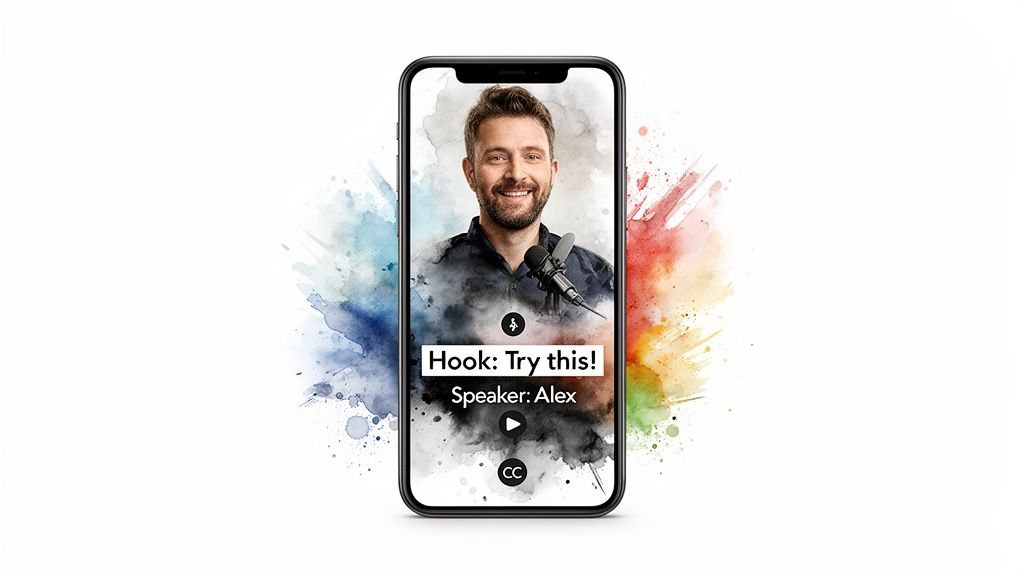
One of the most impactful video marketing best practices is to add captions and text overlays. Over 80% of social videos are watched with the sound off, making captions essential for getting your message across.
This strategy makes your content accessible and boosts engagement. LinkedIn videos with captions see up to 80% higher view completion rates.
How to Implement This Strategy:
- Prioritize Readability on Mobile: Place captions in the bottom third of the video. Keep them short (1-2 lines) so they are easy to read on small screens.
- Emphasize Key Information: Use bolding or different colors on key words to guide the viewer's attention and reinforce your main points.
- Automate Captioning: Manually transcribing is tedious. An AI-powered tool like Flowjin automatically transcribes your audio and generates accurate, synchronized captions you can easily review and edit.
- Identify Speakers: For interviews or panels, add speaker names (e.g., "Alex:") to the captions to avoid viewer confusion.
4. Maintain a Consistent Posting Schedule Across Multiple Channels
A consistent posting schedule is a powerful video marketing best practice. It trains your audience and the platform algorithms to expect and favor your content.
Consistency signals reliability to the platforms. Data from LinkedIn shows that creators who post 3-5 times per week get significantly more profile views than those who post randomly.
How to Implement This Strategy:
- Start with a Sustainable Cadence: Posting three times a week consistently is better than posting daily for one week and then stopping.
- Identify Peak Engagement Times: Use your platform analytics (Instagram Insights, TikTok Analytics) to see when your audience is most active. Schedule posts for those times.
- Batch Your Content Production: Film and edit a month's worth of short-form videos in one or two sessions. This creates a content buffer and removes the daily pressure.
- Use a Unified Scheduling Tool: A tool that schedules content across all platforms from one dashboard saves time. Flowjin’s publishing features let you manage your calendar for LinkedIn, YouTube, TikTok, and Instagram, ensuring your videos go out on schedule.
5. Extract and Amplify Quotable Moments and Key Insights
One of the most scalable video marketing best practices is to turn powerful quotes or key insights from your videos into standalone assets like graphics or audiograms.
This strategy extends the life of your content by creating assets that are easy to consume and share. Podcast networks use audiograms with standout quotes to drive traffic back to full episodes.
How to Implement This Strategy:
- Identify High-Impact Moments: While editing, flag moments that contain surprising data, contrarian views, or actionable advice.
- Keep It Concise: Aim for quotes under 20 words for maximum impact on platforms like LinkedIn and X. Flowjin can help you do this; learn how to turn your videos to quote graphics automatically to get started.
- Design Branded Logos: Use an AI logo maker with a consistent template, brand colors, fonts, and logo elements to build strong brand recognition.
- Use Audiograms for Audio Content: Turn powerful audio clips into short audiograms with animated captions using an audiogram maker tool
- Add Context: Always include a caption that adds context and links back to the original full-length video.
6. Use Data and Analytics to Identify Top-Performing Content Types
One of the most powerful video marketing best practices is to let data—not guesswork—guide your content strategy. Tracking performance metrics helps you understand what resonates with your audience so you can double down on what works.
Focus on analytics that reveal audience behavior. For example, YouTube's audience retention graphs show you exactly when viewers drop off. LinkedIn analytics might reveal that 30-second clips get 3x more engagement than videos over a minute long.
How to Implement This Strategy:
- Establish Core Metrics: Track key performance indicators (KPIs) like watch time, average view duration, engagement rate, and click-through rate (CTR).
- Segment Your Analysis: Break down your data by content type (tutorial vs. interview), video length, and topic to find patterns.
- Conduct Simple A/B Tests: Isolate one variable at a time. Test different thumbnails, titles, or calls to action to see what drives better results.
- Create a Weekly Metrics Report: Spend 30 minutes each week reviewing your analytics. A simple spreadsheet can help you spot trends and make informed decisions for your content calendar.
7. Leverage Native Platform Features (Stories, Reels, Shorts, Lives)
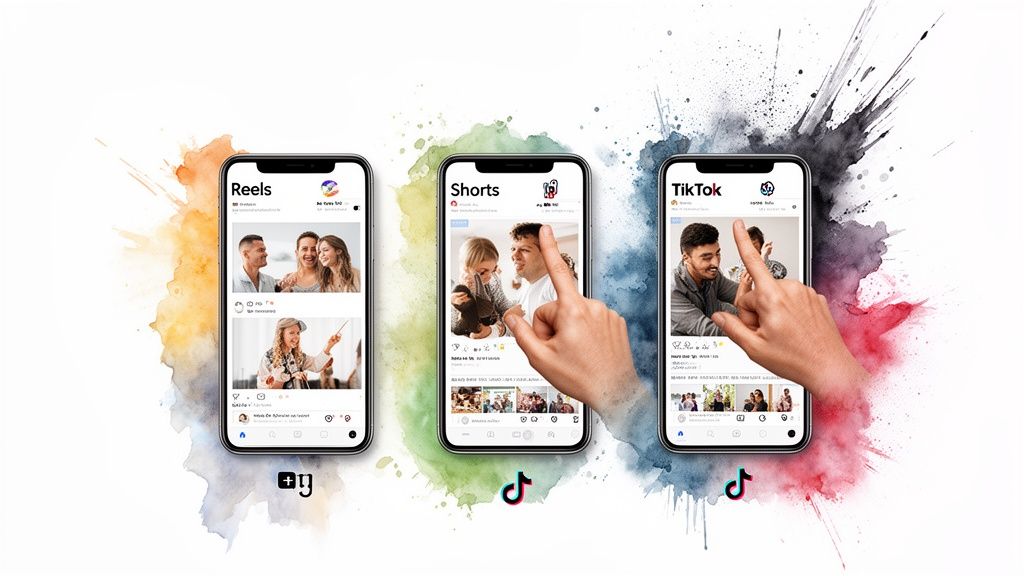
A key video marketing best practice is to use the native video formats platforms want to promote. Using Instagram Reels, YouTube Shorts, and TikTok videos gives you a direct line to increased organic reach.
These formats get an algorithmic boost. Instagram Reels can outperform traditional feed posts by over 40% in engagement. By creating content specifically for these features, you give your videos the best chance to succeed.
How to Implement This Strategy:
- Prioritize Vertical Video (9:16): Design your short-form content for the full-screen, vertical experience of Reels, Shorts, and TikTok.
- Embrace Trends and Native Audio: Use trending sounds and effects from within the platform’s editor. A trending audio track can dramatically increase viral potential.
- Adapt Content for Format: Stories should be quick and interactive (use polls/stickers). Reels and Shorts must grab attention in the first two seconds. For content inspiration, explore these YouTube Shorts ideas.
- Test Live Streaming: Use features like Instagram Live or YouTube Live for Q&A sessions or behind-the-scenes content to build a stronger community connection.
8. Create Transcripts and Written Content from Video for SEO and Accessibility
An often-missed video marketing best practice is treating your video's audio as a separate asset. Transcripts and blog posts from your videos boost search engine optimization (SEO) and accessibility.
Search engines like Google can't "watch" your video, but they can index its text. A transcript provides a word-for-word text version that search engines can read and rank. This practice also makes your content accessible to people who are deaf or hard of hearing, or those who simply prefer to read.
How to Implement This Strategy:
- Publish Transcripts On-Page: Embed the full transcript directly on the same page as your video in a "show more" section. This helps search engines associate the text with the video.
- Format for Readability: Structure your transcript with speaker labels, timestamps, and paragraph breaks to improve the user experience.
- Automate and Refine: Use an AI transcription service to create a quick draft. Then, manually review and correct it for accuracy.
- Create Summary Blog Posts: Pull key insights from your transcript to create a separate summary blog post (500-800 words). Embed your video at the top to create a rich, multi-format piece of content.
9. Build Community Through Comments and Engagement
Effective video marketing isn't just about publishing; it's about building a community. Treating your comments section as a two-way conversation turns passive viewers into loyal advocates.
When viewers see you engaging, they are more likely to participate, signaling to the algorithm that your content is valuable. This transforms a simple video post into a hub for brand interaction.
How to Implement This Strategy:
- Prioritize Early Engagement: The first hour after publishing is critical. Reply to as many comments as possible to encourage more interaction.
- Ask Specific Questions: Instead of a generic "What do you think?", ask targeted questions in your video or caption, like "What’s the biggest challenge you face with X?"
- Spotlight Your Community: Feature top user comments in a follow-up video or give shout-outs to active community members.
- Nurture Brand Advocates: Pay attention to your most active and positive commenters. Engage with them directly and make them feel valued.
10. Optimize Video Length for Each Platform
One of the most important video marketing best practices is tailoring your video's length to the platform. A 10-minute deep-dive that works on YouTube will fail on TikTok.
Each platform has a distinct user consumption pattern.
- YouTube: 8-15 minutes for in-depth tutorials.
- LinkedIn: 30-90 seconds for professional insights.
- TikTok/Reels: 21-34 seconds for maximum completion.
Matching length to the platform improves metrics like completion rate, which signals to the algorithm that your content is a good fit.
How to Implement This Strategy:
- Edit Aggressively: Cut anything that doesn't serve the core message. Aim to remove 20-30% of what you initially think is essential.
- Align Length with Platform Norms: Use the data-backed benchmarks above as your starting point.
- Hook Viewers in the First 3 Seconds: The first three seconds are non-negotiable. State the problem, ask a provocative question, or show a surprising result right away.
- Use Pattern Interrupts for Longer Videos: For YouTube videos, use a visual change (like a jump cut, B-roll, or text overlay) every 60-90 seconds to reset the viewer's attention.
10-Point Video Marketing Best Practices Comparison
Turn Your Best Practices into a Repeatable System
We've covered a complete set of video marketing best practices, from repurposing content to building a community. Their true power is unlocked when they stop being individual tasks and become an integrated, repeatable system.
Success in video marketing isn't about creating more content from scratch. It's about creating smarter. The most effective creators build a content engine where a single high-value asset, like a webinar, fuels weeks of platform-native micro-content.
Key Pillars of a Sustainable Video Marketing Engine:
- Systemize Repurposing: Have a clear workflow. Record long-form content, identify key moments, then systematically extract, format, and schedule clips for every platform. This is how you scale output without scaling your workload.
- Automate the Grunt Work: The most time-consuming parts of video marketing—clipping, transcribing, and captioning—can be automated. Using AI-powered tools frees you up to focus on creating great core content.
- Prioritize Data-Informed Decisions: Your analytics dashboard is your roadmap. Consistently review which video formats, lengths, and topics resonate most with your audience on each platform to inform your future content.
Key Insight: A successful video strategy is a feedback loop. Your long-form content provides the material for short-form clips, and the performance data from those clips tells you what kind of long-form content to create next.
Mastering these video marketing best practices allows you to build a powerful brand presence, foster a loyal community, and drive measurable results without burning out. By building a system, you ensure consistency and turn your video marketing from a chore into a predictable growth engine.
Ready to stop manually chopping up videos and start building a scalable content engine? Flowjin uses AI to automatically find the most engaging clips from your long-form videos, adds animated captions, and generates platform-specific copy in minutes. Turn your podcasts and webinars into a month's worth of social content with Flowjin.